You Matter the Most Embroidery Review
As a designer who has spent years stitching custom pieces for clients and managing a small handmade shop, I have seen countless digital files come across my desk. Some are intricate masterpieces that demand precision, while others are simple yet powerful statements that elevate a project instantly. Today, I am evaluating You Matter the Most, a motivational quote design intended for various crafting platforms like Cricut and Silhouette. My goal is to look past the marketing buzzwords and determine how this specific embroidery file performs when transferred from a screen to fabric in a real-world commercial setting.
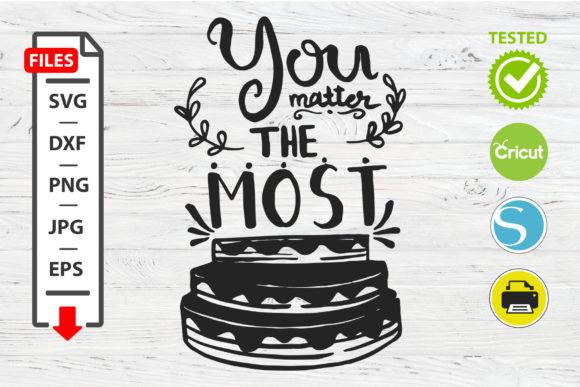
The first impression of You Matter the Most is one of gentle reassurance. The layout feels balanced, avoiding the cluttered look that often plagues text-heavy designs. When I opened the file set, which includes formats like SVG, DFX, PNG, JPG, and EPS, the vector quality appeared sharp. This is crucial because any pixelation or jagged edges will translate poorly into stitches, especially on smaller garments. The visual personality of the design suggests it belongs in spaces requiring warmth and connection. It does not scream for attention with aggressive bold fonts; instead, it invites the viewer in, making it an excellent candidate for nursery decor, baby items, or personalized gifts where emotional resonance matters more than high-contrast graphics.
Real-World Application: From Digital File to Finished Product
Let us imagine a practical scenario. I am preparing a batch of custom embroidered tote bags for a local boutique's holiday collection. The client wants something uplifting to pair with their gift sets. I decided to test You Matter the Most on these canvas totes. The decision was driven by the need for a design that would remain legible after multiple washes but still feel soft to the touch. Unlike a dense fill stitch block, this quote relies heavily on clean lines, likely utilizing satin stitch for the lettering. On a sturdy canvas background, the contrast between the thread and the fabric would be striking, creating a professional finish that immediately boosts the perceived value of the product.
However, the versatility of this design extends beyond totes. For an Etsy seller focusing on baby products, this motif is ideal for a onesie or a soft cotton blanket. The simplicity of the phrase means it can be stitched in pastel threads without losing its impact. In a nursery setting, the design acts as a focal point without overwhelming the space. Similarly, for a sweatshirt embroidery project, the design offers a subtle branding element that customers appreciate. It transforms a standard garment into a personalized item, increasing the likelihood of a sale in a crowded marketplace.
I also considered using this design for an embroidered patch or a cap. While caps present challenges due to their curved surfaces, the clean geometry of You Matter the Most handles curvature well compared to more ornate scripts. If executed correctly on a structured hat, it could serve as a premium logo for a craft business. The key here is the stitch density. A lower density ensures the fabric does not pucker around the curve of the brim, maintaining the structural integrity of the hat while delivering a crisp message.
Navigating Technical Challenges and Fabric Limitations
Despite its strengths, there are specific situations where You Matter the Most requires careful consideration. Textile artists know that no single design fits every fabric type. On thin fabrics, such as lightweight linen or sheer cotton, the tension required to hold the shape of the letters might cause the material to gather or tear. In these cases, the use of a proper stabilizer becomes non-negotiable. Without adequate backing, the running stitch or satin stitch details could distort, ruining the finished product.
Stretchy fabrics, like jersey knits used for t-shirts or hoodies, pose another hurdle. If the design is too large or the stitch density is too high, the elasticity of the fabric may be compromised, leading to cracking or pulling over time. For stretchy materials, I recommend testing the design on a scrap piece first to ensure the hoop size and tension settings are optimized. Additionally, working with dark fabric requires a strategic choice of thread colors. Light threads on dark backgrounds offer high visibility, but if the design includes fine details, they might get lost unless the thread count is sufficient.
Small hoop sizes present a particular constraint. If you intend to use this design on a child's bib or a small pocket, the legibility of the text must be scrutinized. Tiny lettering in embroidery often suffers from thread bridging, where excess thread connects separate letters, blurring the message. Before committing to a full production run, always inspect the small details under magnification. If the font weight is too thin, consider scaling up the design slightly to ensure clarity.
Impact on Brand Perception and Customer Trust
In the world of handmade goods and digital product sales, the quality of your design directly influences customer trust. A sloppy stitch job or a distorted image can make even the most heartfelt message feel cheap. You Matter the Most, when stitched correctly, projects professionalism and care. It signals to the buyer that the creator took time to select a meaningful design and executed it with skill. This level of detail is what separates a hobbyist project from a commercial-grade asset.
For digital product sellers offering design assets, the inclusion of multiple formats (SVG, DFX, PNG, JPG, EPS) adds significant value. Buyers can adapt the file for different software and machine types, increasing the utility of the purchase. Whether a customer is printing a printable mockup for a listing or using the file for a direct-to-garment process, having versatile options ensures the design remains relevant. However, it is vital to confirm licensing terms before selling finished items made from this file. Commercial rights vary, and understanding these boundaries protects both the designer and the end-user.
Practical Designer Notes for Implementation
To get the best results from You Matter the Most, I advise following a strict workflow. First, always test the design on scrap fabric that matches your final project material. This step reveals potential issues with thread tension, color contrast, and stabilizer needs before you risk damaging a valuable garment. Check the thread colors against your fabric texture; sometimes a color that looks perfect on a screen appears dull on a textured weave.
Review the stitch density carefully. High-density areas can create stiff spots that detract from the comfort of apparel, particularly for baby items or loungewear. Confirm your hoop size aligns with the design dimensions to avoid unnecessary trimming or distortion. If you are using this for an applique design, ensure the base fabric is stable enough to support the added layers. Comparing light and dark fabric backgrounds in black and white mockups can help visualize how the design will hold up in low-light conditions.
Finally, remember that the success of an embroidery project lies in the preparation. Use the right stabilizer for your fabric weight, whether it is cut-away for stability or tear-away for temporary support. Inspect small details closely to ensure no loose threads or gaps exist. By treating You Matter the Most with the same rigor as any high-end commercial embroidery project, you ensure that the final product not only conveys the intended message but also stands up to the demands of daily use and frequent washing.
Whether you are an Etsy seller looking to expand your catalog, a small business owner creating branded merchandise, or a crafter making a personalized gift, this design offers a solid foundation. It balances aesthetic appeal with technical feasibility, making it a reliable addition to your arsenal of design assets. Just remember to verify all file specifications and license agreements before launching into production, ensuring your creative efforts result in a finished product that truly honors the sentiment behind the words.