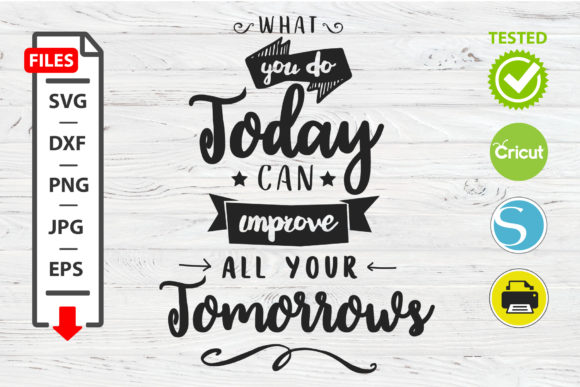
What You Do Today Can Improve All Your Tomorrow
I have stitched thousands of designs in my career, from intricate floral monograms to bold corporate logos. When a new embroidery file lands on my desk, I do not just look at the image; I visualize the needle movement, the tension of the thread, and how the final piece will feel in a customer's hands. Recently, I evaluated the design titled What You Do Today Can Improve All Your Tomorrow. It falls under the Crafts and Graphics categories, but its true value lies in how it translates from a digital vector into a tactile, stitched reality.
This is not merely a motivational quote for a screen; it is a statement meant to be worn, carried, or displayed. As an experienced designer, I approached this project with the mindset of a small business owner preparing a custom line for Etsy or a boutique shop. The question was simple: does this design hold up under the scrutiny of real-world embroidery?
The First Impression: Mood and Visual Personality
The immediate feeling of What You Do Today Can Improve All Your Tomorrow is one of grounded optimism. Unlike many trendy quotes that rely on flashy fonts or complex imagery, this design leans on the power of typography itself. The layout feels balanced, suggesting a clean, modern aesthetic that fits well within the current market for handmade goods. It creates a mood of mindfulness and forward-thinking, which resonates deeply with buyers looking for meaningful gifts.
For an embroidery designer, the visual personality is crucial. This design naturally belongs to projects that require a touch of elegance without being overly ornate. It avoids the clutter often found in cheap digital downloads. Instead, it offers a clear path for stitch placement. Whether you are working on a soft baby onesie or a sturdy canvas tote bag, the shape of the text suggests a versatile approach. It feels like a design that could anchor a brand identity, providing a sense of professionalism and consistency that buyers trust.
Real-World Application: From Digital File to Finished Product
To truly understand the potential of this design, let us imagine a specific scenario. I am preparing a collection of personalized gift sets for the holiday season. My goal is to create a line of embroidered kitchen towels and aprons for home cooks who appreciate a daily reminder of productivity and self-improvement. I select What You Do Today Can Improve All Your Tomorrow as the centerpiece for these items.
In this context, the design performs admirably. On a white cotton tea towel, the contrast between the thread and the fabric would be crisp, making the message pop immediately. The phrase is long enough to span the width of a standard 4x4 hoop, creating a substantial presence on the garment. For a small shop product, this adds perceived value. Customers do not just buy a towel; they buy a sentiment. The design elevates a common household item into a thoughtful, personalized gift.
I also considered using this for custom apparel, specifically sweatshirts for a local running club or a yoga studio. The motivational nature of the text aligns perfectly with fitness and wellness communities. When stitched onto a fleece sweatshirt, the texture of the fill stitches adds a premium feel that distinguishes the item from mass-produced retail wear. It signals that care was taken in the creation process, which is exactly what a creative entrepreneur wants to convey.
Where Caution Is Required: Technical Challenges
However, no design is without its pitfalls. As I reviewed the details of What You Do Today Can Improve All Your Tomorrow, several areas required careful consideration before committing to a full production run. One of the primary concerns is the length of the phrase. If you attempt to place this on a small hoop size, such as a 3x3 inch frame, the lettering may become too compressed. This can lead to thread breaks and a loss of legibility, especially if the font has thin strokes.
Textured fabrics present another challenge. While a smooth cotton twill works well, placing this design on a heavy denim jacket or a nubby wool blend requires a robust stabilizer system. Without proper support, the dense stitch areas might pucker, distorting the message. Furthermore, if you plan to use this on stretchy fabric like jersey knit, you must ensure the design includes adequate underlay to prevent shifting during the machine embroidery process.
I also had to consider dark fabric applications. If you intend to embroider this on black or navy garments, the thread color choice becomes critical. Light threads on dark backgrounds can sometimes lack definition depending on the density of the fill stitch. It is essential to test the design in black and white mockups first to ensure the contrast remains high even after the stitching settles. Additionally, products that need frequent washing, such as work aprons or kids' clothing, demand a higher stitch density to withstand abrasion. If the design is too sparse, the letters may fray over time, damaging the reputation of your finished product.
Impact on Brand and Customer Trust
The quality of your machine embroidery design directly influences customer trust. In the world of Etsy sellers and digital product sellers, the difference between a generic print and a high-quality embroidered piece is often the deciding factor for a purchase. A design like What You Do Today Can Improve All Your Tomorrow, when executed correctly, communicates reliability. It shows that you understand the nuances of the craft.
When a buyer receives a hat or a pillow cover featuring this quote, the clarity of the stitching reinforces the idea of a professional operation. There is no ambiguity about the message, and the physical presence of the thread adds a layer of warmth that digital prints cannot replicate. This enhances the giftability of the item. People are more likely to give a handmade product with a clear, inspiring message than a generic item. It fosters recognition and encourages repeat engagement with your brand.
Practical Notes for the Designer
Before you begin stitching this design for a commercial project, there are several technical steps you must take. First and foremost, test the design on scrap fabric. This allows you to check thread color contrast and review stitch density without risking your best materials. Inspect small details closely, particularly the curves in the letters, to ensure they will not break during the hooping process.
You must also confirm your hoop size requirements. While the exact dimensions were not provided in the initial file description, ensuring the design fits your intended garment is vital. Use a proper stabilizer that matches the weight of your fabric; for light fabrics, a cut-away might be necessary, while heavier fabrics may handle tear-away better. Check whether the design works for both personal and commercial projects by reviewing the licensing terms associated with the file.
If you are selling finished items, compare light and dark fabric backgrounds to see which yields the best visual appeal. Utilize printable mockups to preview the design on various products before you invest in production. Finally, verify the file formats—SVG, DFX, PNG, JPG, EPS—to ensure compatibility with your digitizing software. By following these guidelines, you ensure that What You Do Today Can Improve All Your Tomorrow becomes more than just a graphic; it becomes a cornerstone of your craft business.
In conclusion, this design offers a strong foundation for a variety of embroidery projects. It balances simplicity with impact, making it suitable for everything from nursery decor to boutique branding. With careful attention to technique and material selection, it can serve as a valuable asset in your portfolio of design assets.